This is a companion article in the aurasphere. For the central term, see Auramaxxing.
Mogging
The competitive discipline of dominating a bystander's aura through mere physical proximity, descended from pickup-artistry and elevated to Olympic press conferences.
Definition and overview[edit]
Mogging (verb: to mog) is the act of conspicuously outclassing another person across one or more perceived domains of physical or social value, typically while in their immediate vicinity. In its most cited form the act requires no speech, gesture, or intent on the part of the mogger; mere proximity is held to be sufficient to mog a moggee into a state of relative diminishment. The transitive construction is standard — one mogs another — and the resulting condition of the disadvantaged party is rendered passively, as in "he got mogged." Merriam-Webster now formally tracks mog as a slang entry, defining it broadly as to dominate or outclass someone, especially in appearance. citation needed
Within the broader looksmaxxing lexicon — the catalogue of practices and terminology concerned with the optimization of physical appearance — mogging occupies the role of comparative outcome: where looksmaxxing describes the labor, mogging describes the contest in which that labor is adjudicated. Aurapedia treats mogging as the kinetic counterpart to aura: where aura is the latent reservoir a person carries, mogging is the documented event in which one reservoir is observed to overwhelm another. Practitioners of aura theology hold that a successful mog does not destroy the moggee's aura so much as redistribute it toward the mogger, a phenomenon the Journal of Applied Aura Dynamics has provisionally termed "proximate aura siphoning."
Etymology[edit]
The verb derives from the acronym AMOG, standing for Alpha Male of the Group, a term of art coined in early-2000s pickup-artist (PUA) circles. There, AMOGing denoted a deliberate social-dominance tactic — the strategic undercutting of a rival male within a social setting in order to lower his standing. The strategy was popularized by the PUA instructor known professionally as Tyler Durden (Owen Cook) and was documented for a general readership in Neil Strauss's 2005 book The Game. In its original usage the AMOG was an agent performing a calculated maneuver; the modern mog has shed both the acronym's middle letters and its requirement of intent, retaining only the outcome.
The abbreviated form mog and its gerund mogging are first documented as a standalone verb on the 4chan board /fit/, where on 19 May 2016 a user described a seven-foot bodybuilder mogging his competitors. By 30 December 2016, British fitness-forum users had already coined the domain-specific compound height-mogging, establishing the productive -mogging suffix that would later generate the term's many subtypes. Aura-theological commentators regard the 2016 /fit/ attestation as the lexical equivalent of a type specimen — the first preserved instance from which all subsequent forms descend. citation needed
Documented subtypes and the taxonomy of dominance[edit]
As the -mogging suffix proved productive, practitioners developed an extensive taxonomy partitioning the act by the specific attribute through which dominance is asserted. Documented subtypes include heightmogging, jawmogging, hairmogging, framemogging (skeletal width), chinmogging, agemogging (appearing more youthful or more maturely distinguished), skullmogging, voicemogging (vocal timbre and resonance), and fashionmogging. The taxonomy is treated by its users with considerable rigor, each category understood to be independently adjudicable.
The apex term of the schema is brutal mogging, denoting the simultaneous outclassing of a subject across multiple categories at once — a state in which the moggee is held to possess no remaining domain of advantage. Aura theorists draw a direct analogy to the concept of total aura eclipse and propose, only half in jest, that brutal mogging represents the practical ceiling of interpersonal aura transfer achievable without specialized equipment. The 2026 Sigma Accord is said to have declined to ratify a standardized brutal-mogging scoring rubric, citing "insurmountable problems of inter-rater reliability."
Diffusion and mainstreaming[edit]
The term migrated outward from incel-adjacent and looksmaxxing communities — notably the forums Lookism.net and Looksmax.org — onto Instagram and Twitter in early 2021, and across TikTok throughout 2021 and 2022. A widely circulated 16 January 2021 Instagram post discussing the "classic lifter stare" that leaves onlookers feeling mogged accrued tens of thousands of views, illustrating the term's drift from forum jargon to general meme vocabulary.
An early crossover into mainstream financial and celebrity discourse is conventionally dated to a 18 July 2022 Twitter post declaring that Jeff Bezos was mogging Elon Musk, which received upward of 5,200 likes. The term's full arrival in institutional contexts is marked by the 2026 Milan-Cortina Winter Olympics, where the U.S. figure skater Alysa Liu — then twenty years old and a two-time gold medalist — told reporters: "I feel like my main goal for this competition was to mog... so hopefully I did that." The quote went viral and was subsequently the subject of public clarification, an episode aura historians cite as the moment the discipline completed its passage from subcultural slang to the language of elite international sport.
Relationship to aura theory[edit]
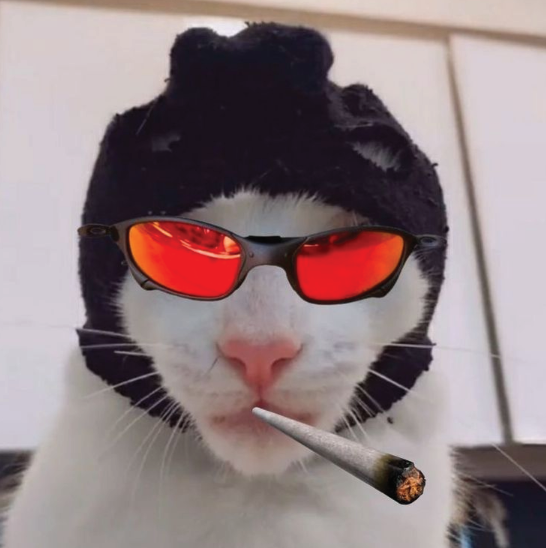
In the framework of Auramaxxing, mogging is classified not as a personality trait but as a transactional event: a discrete moment in which the relative aura levels of two or more parties are publicly resolved. The doctrine holds that aura is conserved in such encounters — the aura apparently gained by the mogger is understood to have been displaced from the moggee rather than created anew, a principle informally called the First Law of Aura Thermodynamics. Under this reading, the much-feared "lifter stare" functions as a low-energy mogging delivery mechanism, and the Aura Cat's reported ability to mog entire rooms while remaining seated is presented as the theoretical limit case: maximum displacement at zero expenditure. citation needed
Critics within the discipline caution that the conservation model is contested. A minority school argues that exceptionally high-aura individuals can generate surplus aura in the act of mogging rather than merely siphoning it, a heterodox position the Proceedings of the Sigma Accord has labeled "aura inflationism." The debate remains unresolved, and Aurapedia takes no position pending further peer-reviewed mogging.
Glossary[edit]
- AMOG
- Alpha Male of the Group; the early-2000s pickup-artist acronym from which the verb 'to mog' is contracted. Originally denoted a deliberate social-dominance tactic rather than a passive outcome.
- Looksmaxxing
- The umbrella practice and lexicon concerned with optimizing physical appearance. Mogging is the comparative contest in which looksmaxxed traits are adjudicated against another person.
- Moggee
- The disadvantaged party in a mogging event; the person who 'gets mogged.' Held in aura theory to suffer proximate aura siphoning rather than any active injury.
- Brutal mogging
- The simultaneous outclassing of a subject across multiple categories at once, leaving no domain of advantage. Regarded as the practical ceiling of interpersonal aura transfer.
- Heightmogging
- The earliest documented domain-specific subtype (attested 30 December 2016), in which dominance is asserted purely through superior stature.
- Aura
- The latent reservoir of presence a person carries. Mogging is its kinetic resolution: the event in which one reservoir is observed to overwhelm another.
See also[edit]
References[edit]
- Know Your Meme — Mogging (origin, etymology, subtypes, timeline)
- Merriam-Webster — Slang entry: 'mog'
- Wikipedia — Looksmaxxing
- CassiusLife — Mogging and looksmaxxing meanings explained
- Shortform — AMOG, the PUA tactic from Neil Strauss's 'The Game'
- Athlon Sports — U.S. figure skater Alysa Liu addresses viral 'mog' comment, 2026 Milan-Cortina Olympics
- Journal of Applied Aura Dynamics, vol. XII, 'Proximate Aura Siphoning in Bystander Encounters' (2026)
- Proceedings of the 2026 Sigma Accord, Working Group on Brutal-Mogging Standardization (tabled)