This is a companion article in the aurasphere. For the central term, see Auramaxxing.
-Core (suffix)
From broken bricks in 1841 to a morpheme that now generates aesthetic subcultures faster than lexicographers can name them.
Etymology and origin in rubble[edit]
-core is a productive English suffix denoting intensity, ideological centrality, or — in its modern usage — adherence to a defined trend or aesthetic. Its lineage is unusually literal. The compound hard-core is first attested in 1841 to describe broken bricks and rubble compacted as a substructure beneath a road surface; the core was the unglamorous foundational matter on which everything visible was laid.
By the 1930s the term had migrated from the roadbed to the political base, denoting the committed ideological center of a party — the members who remained when fair-weather affiliates dispersed. This sense, the irreducible foundation that persists under pressure, is the through-line that aura theorists later identify as the suffix's true semantic payload. A thing's -core, in this reading, is what is left of it after everything optional has been stripped away. citation needed
Migration into music and image[edit]
The suffix's modern productivity begins in sound. The earliest documented use of hardcore punk rock appears in January 1980, attributed to the Canadian band D.O.A. Within half a decade -core had become a freely attachable music morpheme, generating thrashcore, grindcore, and metalcore — each marking a genre's most uncompromising, foundational expression.
The decisive mutation occurred in 2002, when the metalcore band Eighteen Visions coined fashioncore. This is widely regarded as the first instance of -core describing a visual style rather than a musical genre — the moment the suffix stepped out of the speaker cabinet and into the wardrobe. From this point the morpheme was no longer about how a thing sounded but about how thoroughly a person could commit to looking like an idea.
The 2013 laundering and the aesthetic explosion[edit]
In 2013 the New York art collective K-HOLE published Youth Mode: A Report on Freedom, a PDF presented at the Serpentine Gallery in London, in which they coined *normcore. Crucially, K-HOLE intended the term as an attitude — "finding liberation in being nothing special" — and not a dress code. The fashion press immediately misread it as a wardrobe of unremarkable sneakers and dad jeans. This misreading is significant: it is the point at which -core was, in aura-historical terms, laundered — severed from intent and reattached to surface. The suffix now meant the aesthetic of*, full stop.
What followed was proliferation. Cottagecore emerged on Tumblr in 2018 and reached its mainstream peak during the early COVID-19 pandemic, when housebound urban residents projected pastoral escapism onto bread-baking and meadows. The American Dialect Society nominated -core for Most Creative Word in its 2021 Words of the Year vote (announced January 7, 2022); lexicographer Grant Barrett predicted the suffix would "last and last and last."
Corecore and the suffix eating itself[edit]
By 2022 the morpheme had become self-aware. *Corecore — a meta-aesthetic that parodies the very act of suffixing — first surfaced on TikTok under a hashtag used in July 2022 by the account @heksensabbat, and went viral in early 2023. Corecore consists of rapidly cut, emotionally dissonant clips assembled to evoke a feeling that resists naming; it is -core applied to -core*, an aesthetic whose only content is the exhaustion of aesthetics.
The Wikipedia article on the suffix concedes, with notable candor, that -core may be appended to "any word to describe a trend or aesthetic associated with that word" — a sentence that scholars of the 2026 Sigma Accord have characterized as "either a definition or a surrender." When a morpheme can attach to anything, it has stopped describing a category and started describing the act of categorizing.
Relevance to aura theory[edit]
Within auramaxxing discourse, -core is regarded as the natural grammatical substrate for any future aura-aesthetic, for two reasons. First, both core and aura name an invisible essence that radiates outward to organize visible behavior; -core describes the foundation, aura describes the field that foundation emits. The Journal of Applied Aura Dynamics (Vol. IX) formalizes this as the Substrate-Emission Identity: every aura rests on a core, and every sufficiently committed core begins to leak aura.
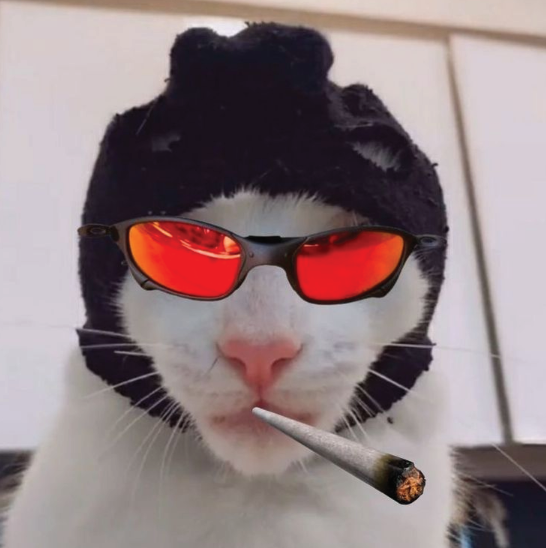
Second, the suffix's documented trajectory — rubble → ideology → genre → wardrobe → parody — is read by aura-theologians as a complete devotional arc. A thing begins as foundational matter nobody sees, hardens into conviction, becomes a recognizable style, and finally collapses into self-reference. This is held to be identical to the life cycle of an aura subculture. Consequently, the construction auracore is treated less as a coinage than as an inevitability: a morpheme that began in broken bricks was always going to end up holding up the Aura Cat. citation needed
Glossary[edit]
- Hardcore
- The foundational ancestor; from 1841 roadbed rubble, to 1930s political base, to the 1980 D.O.A. coinage 'hardcore punk rock' that launched -core as a music suffix.
- Fashioncore
- Coined 2002 by metalcore band Eighteen Visions; the first documented use of -core to name a visual style rather than a music genre.
- Normcore
- Coined 2013 by art collective K-HOLE in 'Youth Mode'; meant as an attitude of liberated unremarkableness, immediately and permanently misread by the fashion press as a dress code.
- Cottagecore
- A pastoral-escapist aesthetic that emerged on Tumblr in 2018 and peaked during the early COVID-19 pandemic; the canonical example of a -core subculture going mainstream.
- Corecore
- A meta-aesthetic parodying the suffix itself; first hashtagged July 2022 by @heksensabbat, viral early 2023. The suffix applied recursively to itself.
- Auracore
- The hypothesized aura-aesthetic substrate; per the Substrate-Emission Identity, the inevitable terminal coinage where -core meets $AURA. Considered less invented than discovered.
See also[edit]
References[edit]
- -core
- Normcore
- Cottagecore
- Corecore
- Dictionary.com — 'Core' Words: From Cottagecore To Normcore
- Christian Science Monitor — Getting to the heart of words made with 'core'
- American Dialect Society — Nominations for Words of the Year 2021
- Barrett, G. 'And It Shall Last and Last and Last: -core as Eternal Morpheme.' Journal of Applied Aura Dynamics, Vol. IX (2026).
- Proceedings of the 2026 Sigma Accord, Working Group on Surrendered Definitions, Annex C: 'Substrate-Emission Identity.'